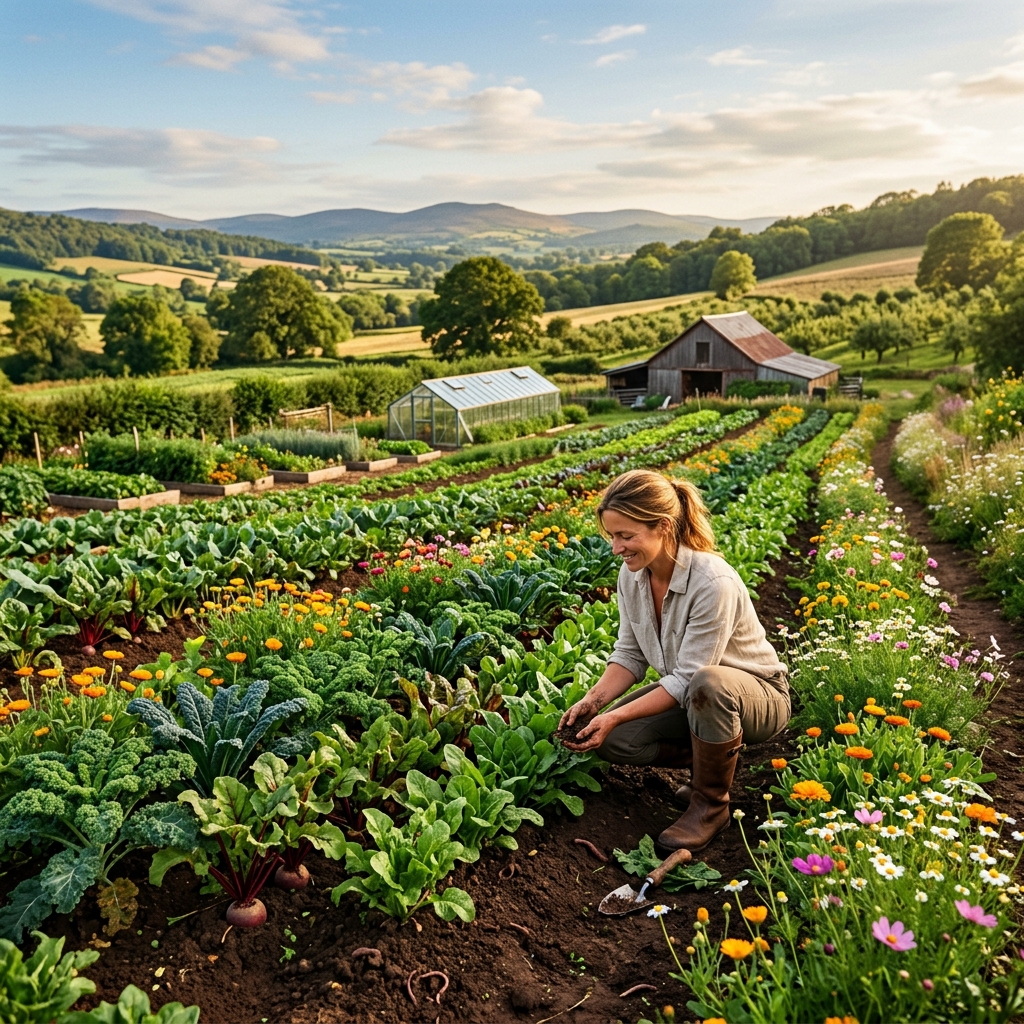
Permaculture Design Principles: Creating Resilient Ecosystems

Master the core permaculture design principles. Learn how to observe nature and build self-sustaining, high-yield agricultural systems that heal the earth.
Are you searching for an agricultural system that actually heals the environment instead of destroying it? Today, the world is grappling with catastrophic topsoil erosion, severe water scarcity, and the ecological devastation caused by industrial monocropping. As conventional farming methods fail under the pressure of climate change, a profound agricultural revolution is rapidly taking root. This revolution is built entirely upon permaculture design principles. Coined in the 1970s, permaculture is not merely a set of clever gardening techniques; it is a comprehensive, scientific design philosophy based on mimicking the resilience and efficiency of natural ecosystems. By actively applying permaculture design principles, we can create human habitats and food production systems that are highly productive, entirely self-sustaining, and ecologically restorative.
The Ethical Foundation of Permaculture
Before diving into the specific techniques, it is crucial to understand that every permaculture system is anchored by three non-negotiable ethics. Whether applied to an urban balcony or a massive rural farm, these ethics guide every decision.
- Earth Care: We must actively acknowledge that the Earth is a living, interconnected system. This ethic demands that we restore soil health, protect ancient forests, and ensure that water systems remain clean and abundant.
- People Care: A sustainable system must provide for people’s fundamental needs—such as nutritious food, safe shelter, and healthy community connections—without exploiting others or degrading the environment.
- Fair Share (Return of Surplus): Recognizing that the Earth’s resources are finite is essential. This ethic dictates that we must set strict limits on consumption and redistribute any surplus yields (food, seeds, or knowledge) back into the community and the earth.
Core Permaculture Design Principles
To successfully transition from a consumer to an active producer, practitioners utilize twelve universal permaculture design principles. Drawing from my extensive experience designing resilient food forests, I have found that mastering the following five principles yields the most dramatic, immediate results.
1. Observe and Interact
Before moving a single shovel of dirt, a successful designer spends significant time simply observing the landscape. Where does the rainwater naturally pool? Which specific areas receive the harsh afternoon sun? By observing these natural patterns deeply, designers can place elements exactly where they will naturally succeed, rather than fighting the existing landscape.
2. Catch and Store Energy
Natural ecosystems are constantly cycling massive amounts of energy, including sunlight, wind, and organic matter. Permaculture aims to capture this free energy while it is abundant and store it for when it is scarce. For example, digging contour swales effectively captures heavy rainwater and sinks it deep into the soil aquifer, ensuring long-term hydration during severe droughts.
3. Produce No Waste
In a healthy, natural forest, the concept of "waste" absolutely does not exist. The output of one biological system is simply the required input for another. Therefore, permaculture design principles demand that we close all loops. Kitchen scraps become chicken feed; chicken manure becomes potent compost; the compost fertilizes the garden; and the garden feeds the kitchen. By designing closed-loop systems, we eliminate toxic pollution and drastically reduce expensive external inputs.
4. Integrate Rather Than Segregate
Industrial agriculture segregates violently: cows are placed in one massive, barren lot, while corn is grown in another massive field. This segregation requires enormous, fossil-fuel-driven energy to move feed and manage concentrated waste. Conversely, permaculture integrates. A classic example is utilizing a "chicken tractor"—a movable coop placed directly over a garden bed. The chickens naturally eat pests, till the topsoil with their scratching, and deposit highly fertile manure exactly where the next crop will be planted.
The Science of Spatial Zoning
A brilliant hallmark of permaculture design principles is the concept of spatial zoning. Zoning organizes the physical landscape based precisely on how frequently specific elements are used or require maintenance. According to the Permaculture Research Institute, efficient zoning minimizes human labor drastically.
For instance, Zone 1 is located immediately outside the house and contains high-maintenance items like daily kitchen herbs. Zone 2 houses staple crops and small livestock. As you move outward, the zones require progressively less human intervention. Finally, Zone 5 is left entirely wild; it serves as a protected sanctuary for native flora and fauna and a place for crucial ecological observation.
Conclusion and Next Steps
In conclusion, permaculture provides a highly practical, scientifically grounded blueprint for human survival. By respecting ecological relationships and applying permaculture design principles rigorously, we can transition from being destructive consumers to becoming beneficial, active participants in a thriving, permanent culture. We truly have the power to design our way out of the climate crisis.
Are you ready to transform your backyard into an abundant, resilient food forest? Explore our comprehensive Eco-Agriculture guides to learn advanced soil-building techniques. Furthermore, consider enrolling in a local Permaculture Design Certificate (PDC) course today to gain hands-on, practical experience.